

A new focus on Radiation Research and Treatment
The use of radiation in cancer diagnosis and treatment limits the effectiveness of current Immunotherapy. Spatially Fractionated Radiotherapy Treatment (SFRT) could improve response. SFRT is an advanced radiation-oncology technique in which radiation dose is delivered in a deliberately non-uniform pattern across a tumor, instead of evenly covering the entire target.
Research is underway at a single institution MD Anderson, Houston, to show the clinical benefits of SFRT with the Convergent MiniBeam. The objective is to increase number of institutions researching Convergent MiniBeam in conjunction with immunotherapy to expand indications and stages under treatment.

Blue is radiation cold, and the red is hot.
Blue can make cancer stronger due to
adaptive response (AR), increased radio-resistance
(IRR) and cancer stem cells (CSCs) induced generation,*as well as damaging existing T-cells.
Convergent MiniBeam opens tumor Selection to smaller tumors


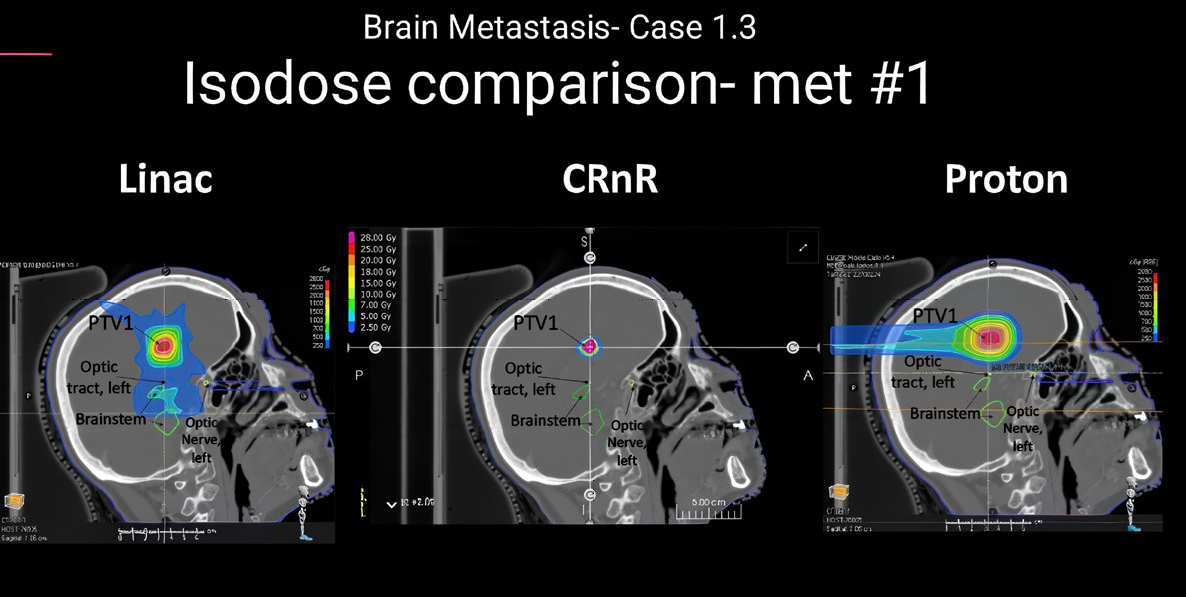
The Convergent Bragg Lens, creates the Convergent MiniBeam, which is a focused X-ray beam, at depth similar to the Bragg Peak of a proton beam at a fraction of cost in terms of room shielding and equipment cost.
Convergent MiniBeam offers proton-like precision at a fraction of the cost


It is beneficial to use a proton-like beam for SFRT because it gives you extreme dose control—both laterally and in depth—while preserving the biological advantages of high peak doses.
Contact Info
Convergent-RnR Ltd.
MATAM High-Tech Park, Building # 21, 9 Sakharov Andrei St, Haifa 3508409, Israel. Phone:+972-4-8584546