
Convergent MiniBeam
Convergent MiniBeam offers proton-like precision at a fraction of the cost.
Convergent enables SFRT with equipment that is orders of magnitude less expensive than proton systems and more efficient for MiniBeam delivery than linacs, the two dominant radiation therapy platforms.
The Convergent MiniBeam platform is designed to deliver higher Peak-to-Valley Dose Ratios (PVDR) with tighter beam vertices compared with conventional LINAC-based SFRT approaches. Higher PVDR is widely believed to be a key contributor to the normal-tissue sparing and immunologic effects observed in spatially fractionated radiation therapy.

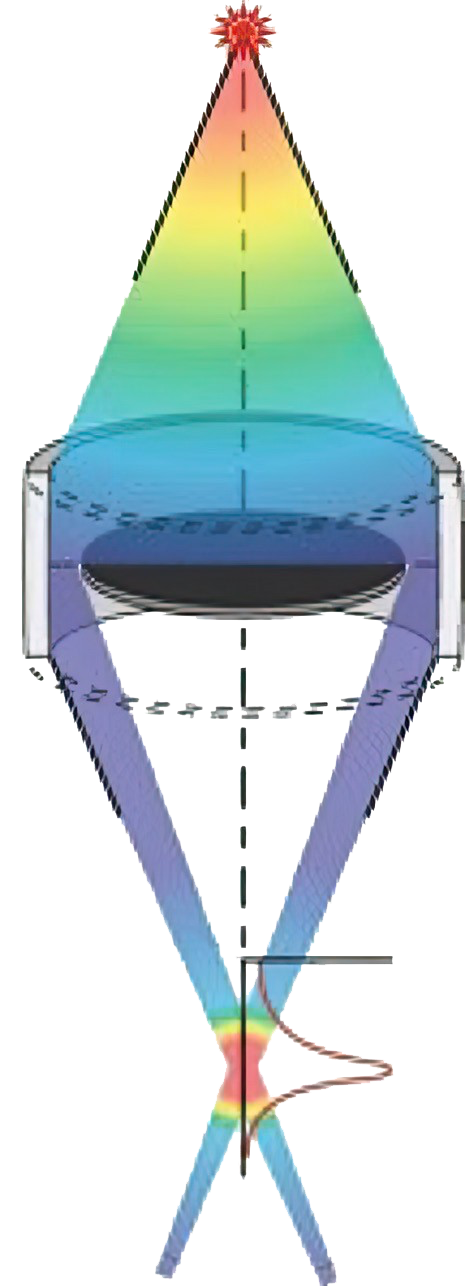

MiniBeam capability delivers millimeter-scale beams with high peak-to-valley dose ratios (PVDR), enabling SFRT in small and medium tumors.
No bunker required
Ideal for small animal research
SFRT veterinary oncology
SFRT and immuno-therapy combinations
FDA submission TBD
Spatially Fractionated Radiotherapy (SFRT) is an innovative treatment approach designed to overcome the limitations of conventional radiation by delivering highly non-uniform dose distributions. Instead of a uniform radiation field, SFRT techniques like GRID Radiotherapy (2D grids for large tumors) and Lattice Radiotherapy (LRT) (3D arrays for bulky, deep-seated masses) deliberately create alternating zones of Peaks and Valleys.
In this setup, a high Peak Dose is delivered directly to specific targets within the tumor, while a significantly lower Valley Dose spares the adjacent healthy tissue and critical structures. This stark contrast is quantified by the Peak-to-Valley Dose Ratio (PVDR), which is optimized to maximize tumor destruction while minimizing normal tissue toxicity.
A major advantage of this technique can be realized using our Convergent Bragg Lens’ localized kilovoltage (keV) mini-beam, that achieve a high PVDR with minimal lateral penumbra. Utilizing this high-accuracy lens allows for the systematic investigation of various SFRT parameters—such as Peak Dose, Valley Dose, and the Peak-to-Valley Dose Ratio (PVDR)—whose exact radiobiological mechanisms and definitive clinical impacts remain an active area of ongoing study.
Despite leaving portions of the tumor in the low-dose valleys, SFRT triggers powerful biological mechanisms that lead to widespread tumor regression. This includes the Bystander Effect, where irradiated cells transmit lethal signals to neighboring un-irradiated cells, and the systemic Abscopal Effect, which shrinks distant, untreated metastases. This systemic response is referred to as in situ tumor vaccination: the intense peak doses cause immunogenic cell death, releasing Tumor-Associated Antigens that are captured by Antigen-Presenting Cells, ultimately activating a robust, T-cell-mediated immune assault against the cancer throughout the body.